Jewel Coloring
- 4.7
- Rating
- 10.00M
- Installs
- Free
- Price
 Analysis by App-foxy
I went into Jewel Coloring expecting a simple way to pass a few quiet minutes, and that is exactly where it works best. This is a casual puzzle game from TaTa Game Technology Limited built around sorting jewel-like pieces into pixel-art pictures. The idea is easy to understand almost immediately: place the right colors in the right areas, watch the image take shape, and enjoy the gradual change from scattered pieces to a finished design.
What surprised me was how much the presentation matters. The game is not trying to turn a small puzzle into a dramatic adventure. Instead, its art direction, gentle pace, and uncomplicated interaction all point toward the same goal: giving me something focused to do without demanding a lot of energy. I can pick it up when I am waiting, take a short break from work, or settle into a longer relaxing session.
It is free, suitable for Everyone, and runs on Android devices using version 6.0 or later. The current version is 1.12.0, and its 5M+ installs show that the format has found a sizeable audience. A 4.8 average from around 72 thousand ratings also suggests that the calm, accessible approach connects with many players, although popularity alone does not make it the right choice for every puzzle fan.
You May Also Like

 Pandora - Music & Podcasts
Pandora’s Music Is Easy to Start, but Harder to Recover
Pandora’s strength is its low-effort path from a seed to a station. Its weak spot is how much confidence it asks you to place in connection, setup, and quiet recovery.

 8 Ball Pool
 Is Built on Rivalries, Rematches, and Routine
A close look at the rivalries, rematches, shared routines, and unanswered safety questions that turn a quick pool match into a persistent mobile community.

 Samsung Music
’s Quiet Strength Is Playing What You Already Own
Its reach comes less from spectacle than from dependable access to a personal library. That simplicity is both the app’s strongest retention engine and its ceiling.

 AccuWeather: Weather Radar
AccuWeather Review: A Quick, Clear Forecast for Everyday Decisions
For everyday plans, the best forecast is the one you can understand quickly. AccuWeather makes rain timing, radar, and local conditions easy to act on, with a few trade-offs.

 Hill Climb Racing
Why Hill Climb Racing Still Turns Crashes Into One More Run
A tiny car, a bumpy hill and one more upgrade: Hill Climb Racing keeps resurfacing because its simple chaos makes every near-miss feel personal.

 AliExpress - Shopping App
AliExpress Makes Global Shopping Feel Personal, but Shoppers Bear the Risk
AliExpress turns a global marketplace into a pocket-sized discovery engine. Its reach is useful, its shopping loop compelling, and its trade-offs easy to miss.
More From Our News Desk
View All News


A small game with a clear visual promise
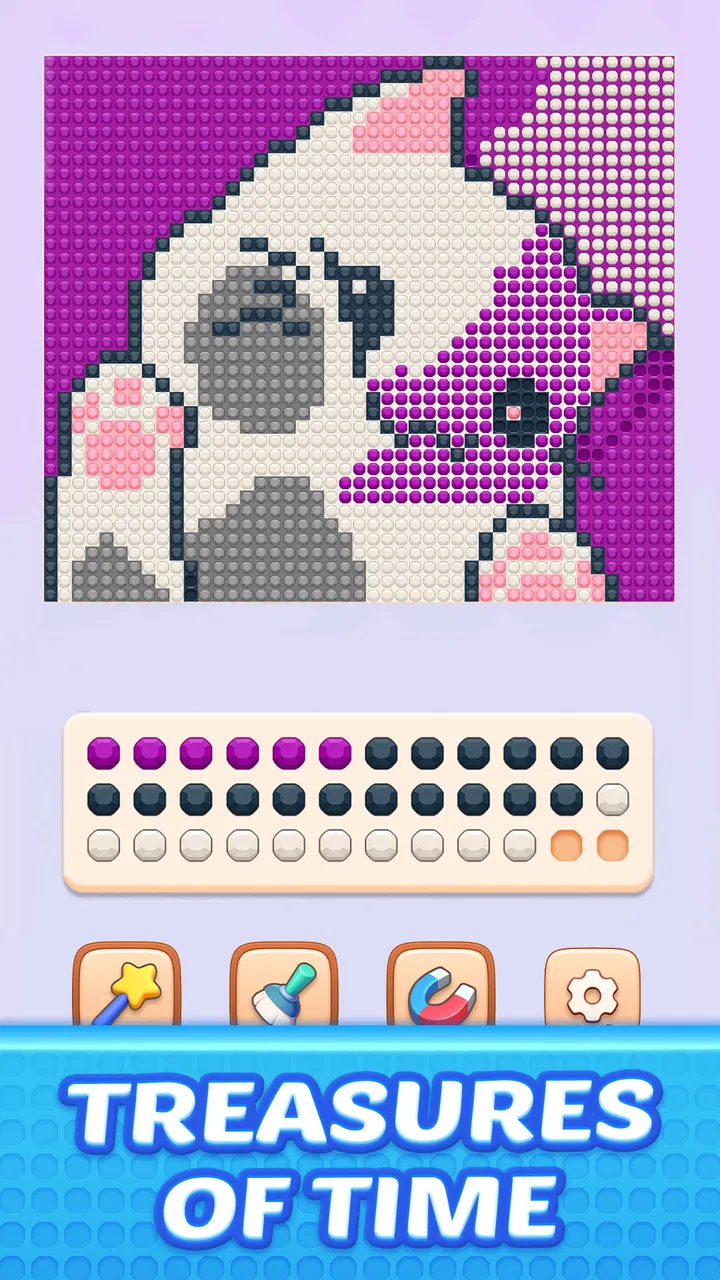
My first impression was that the game understands its own scale. It does not bury the main activity under a complicated menu structure or a heavy story setup. I can get to the coloring task quickly, which is important for a title designed around short, low-pressure sessions. The pixel-art format gives the screen a recognizable identity without making the visuals difficult to read.
The jewel theme adds a little sparkle to what could otherwise feel like ordinary color matching. Each completed area contributes to a larger picture, so progress feels more tangible than simply clearing abstract tiles. I found that useful psychologically: even a brief session leaves behind a visible result. That makes the game feel more like a tiny creative project than a sequence of unrelated taps.
The opening experience is especially friendly to people who do not normally play puzzle games. There is no need to learn a large group of rules before starting. The basic visual language does most of the explaining. Colors, spaces, and the unfinished image tell me what I should be doing, so the learning curve stays close to zero.
That simplicity can also expose the game’s main limitation. If I want deep strategy, complicated combinations, or a strong sense of competition, the first few sessions may feel too gentle. The appeal depends on whether I value a relaxing rhythm more than difficult decision-making. I would recommend it to someone who wants a quiet visual activity, but not as a replacement for a demanding logic game.
The game’s age rating reinforces that broad appeal. Because it is marked Everyone, I can imagine it being used by children, adults, and older players looking for something visually clear. Still, the accessible design should not be mistaken for unlimited variety. Players who need constant novelty may eventually find the basic loop familiar.
Pixel art as the game’s visual language
The strongest design choice is the use of pixel art as a structure rather than mere decoration. Pixel images naturally divide a picture into small, readable units, which fits the sorting mechanic. Every placement feels like a small correction to the larger image. I do not need artistic skill, but I still get the satisfaction of seeing an image emerge through my actions.
This approach also controls the visual noise. A highly detailed illustration could make a color-based puzzle tiring, especially on a small phone screen. Pixel shapes keep the important information compact. When I am playing in a short session, I can understand the state of the picture without studying it for long.
The jewel styling gives the colors a slightly more polished personality than plain numbered squares would have. It supports the feeling that I am arranging bright, collectible-looking pieces, while the pixel grid keeps the task grounded and practical. The two ideas work together: sparkle supplies charm, and blocky artwork supplies clarity.
One useful habit is to look at the unfinished picture as a whole before placing pieces rapidly. The larger shapes can help me recognize what I am building, and that makes the process feel less mechanical. I also find it easier to stay oriented when I work in small visual groups instead of trying to scan the entire board repeatedly.
That is one of the game’s less obvious strengths: the art can guide attention without adding instructions. A player who feels unsure can use the image itself as a map. On the other hand, anyone who prefers text-heavy clues or explicit strategic information may find the visual guidance too soft.
How sound and pacing support the mood
The game’s mood depends on restraint. Its concept is not about urgency, and the pacing gives me room to make progress without feeling chased. That makes it suitable for moments when I want to lower the intensity of my screen time rather than increase it. I can pause mentally between placements and return to the picture without losing the basic thread of what I was doing.
Sound, when used as part of this kind of presentation, works best as feedback rather than spectacle. The important question is whether the audio supports the tactile feeling of placing a piece and completing an image. A loud or aggressive presentation would fight against the visual calm, while understated feedback keeps the attention on the board.
I would not choose this game for its audio identity alone. Its real strength is the combined mood created by color, spacing, and pace. The sound is most useful when it confirms progress without becoming the reason to keep playing. That balance matters because a relaxing game can quickly become irritating if every small action feels overemphasized.
For everyday use, the pacing is more important than any single visual effect. I can play during a short waiting period without needing to commit to a long challenge. I can also spend more time completing several pictures when I want a repetitive activity that keeps my hands occupied. The same structure serves both situations because the game does not rely on a dramatic buildup.
There is a trade-off here. A slow, steady rhythm is comfortable, but it may feel flat to players who expect escalating tension. Traditional match-three games often use timers, cascading effects, and increasingly urgent boards to create excitement. Jewel Coloring takes the opposite route. It asks me to notice completion rather than chase a high-energy reward.
Where the mechanics fit and where they fall short
The core mechanic is easy to grasp: sort jewel-like colors into the matching parts of a pixel-art image. That direct relationship between action and result gives the game its accessibility. I do not have to remember a complicated system, memorize special moves, or plan several turns ahead before making a safe move.
Because the task is so approachable, it works well for casual players who want a low-stakes puzzle. It can also be a good introduction for someone who feels intimidated by games with grids, timers, or long tutorials. The visual outcome provides a clear reason to continue, and each completed section offers a small sense of closure.
My preferred way to play is in deliberate passes. First, I scan the image and identify the most obvious color groups. Then I place pieces in a concentrated area rather than jumping randomly around the board. This reduces visual searching and makes the transformation easier to follow. It is a small workflow, but it makes the experience feel more purposeful.
Another useful approach is to treat the board as a picture before treating it as a puzzle. Looking for recognizable outlines can help when several areas contain similar colors. Instead of focusing only on individual jewels, I ask which placements will clarify a larger object or pattern. That turns a very simple activity into a modest exercise in visual organization.
The game is less convincing for people who want meaningful failure states. A challenging logic title forces me to reconsider a plan, while this type of coloring activity is primarily about steady completion. If I am looking for a puzzle that tests deduction under pressure, I would choose something more demanding. Here, the reward is the finished picture and the calm process of reaching it.
It is also worth considering the role of repetition. The same basic action remains at the center of the experience, so enjoyment depends on whether I like gradual visual progress. I can imagine playing it daily in short bursts, but I would not expect it to replace a broader collection of puzzle genres. It is a focused tool for relaxation, not an all-purpose game library.
The free price lowers the barrier to trying it, especially for families or players who do not want to make an immediate purchase. The practical question is not whether the concept is accessible—it is—but whether the presentation and pace hold attention over time. For me, it works best when I approach it as a calming routine rather than a game I need to master.
Who will enjoy the everyday use case
A realistic example is a ten-minute break between tasks. I can open the game, complete part of a pixel image, and stop without feeling that I abandoned a complicated mission. The visible progress makes the short session feel worthwhile. That is more satisfying than opening an endless feed when I want a small mental reset.
It also suits travel and waiting rooms because the rules are easy to remember after a pause. I do not need to rebuild a strategy from memory. When I return, the unfinished picture explains the next step. This continuity is valuable for casual play, where interruptions are normal rather than exceptional.
Families may appreciate the clear visual goal, especially when a child wants an activity that does not require advanced reading. Adults who enjoy coloring books, simple sorting tasks, or pixel-art aesthetics may find a similar appeal in digital form. The game can be shared as an idea, but the experience remains mostly individual and quiet rather than social.
I would skip it if my main reason for playing is competition, narrative discovery, or complex tactical planning. It is also not the best fit if I become bored by repeated color placement after a few minutes. In those cases, a match-three title, a traditional logic puzzle, or a story-driven casual game would offer stronger variety and more pronounced goals.
The comparison with usual alternatives is quite clear. Match-three games usually make each move part of a chain reaction, with stronger emphasis on combos and momentum. Coloring books focus more directly on creative choice, while this game gives me a defined image and a sorting task. Traditional nonogram-style puzzles ask me to infer hidden patterns through logic. Jewel Coloring sits between these options: it has the visual satisfaction of coloring, but the structure of a guided puzzle.
That middle position is both its identity and its boundary. I get more direction than in freeform coloring, but less strategic pressure than in a logic game. I get a calmer rhythm than in many match-three titles, but also fewer moments of surprise. Knowing that trade-off before downloading it will prevent disappointment.
Practical expectations before installing
The technical entry point is modest: Android 6.0 or later is supported, and the game is free to install. That makes it approachable for people using older compatible devices rather than only recent phones. I would still keep the screen brightness comfortable, because the appeal depends on distinguishing small colored areas without tiring my eyes.
The current release is version 1.12.0. In practical terms, that tells me the game has an established version line rather than being presented as an untouched first experiment. I would approach updates with the same sensible habit I use for any mobile game: install them when convenient, then check whether the controls and visual balance still feel comfortable.
The audience response is strong, with around 1.1 thousand written reviews alongside the larger rating total. I treat that as a useful sign of broad satisfaction, not as a guarantee that every player will enjoy the same pace. Ratings tend to reward accessibility, and accessibility is indeed one of this game’s clearest qualities.
One thing I would pay attention to during the first session is whether the board remains comfortable to read on my particular phone. Pixel art depends on clean separation between small areas. If my display is cramped or my eyesight prefers larger targets, the experience may be less relaxing than it appears in promotional images. That is not a flaw in the concept, but it is an important personal fit issue.
I would also decide in advance how I want to use it. If I open it expecting a full-length gaming session with major progression, I may judge it too harshly. If I use it as a visual reset between demanding activities, its design makes much more sense. The same mechanics can feel either pleasantly focused or overly repetitive depending on that expectation.
The atmosphere holds together because every part stays modest
What I like most is the coherence between the visual style and the mechanical purpose. The jewel look promises brightness, the pixel grid keeps the image readable, and the sorting action gives my attention a simple place to rest. Nothing needs to be spectacular for the combination to work. The game earns its relaxing character by avoiding unnecessary intensity.
The setting is deliberately light. There is no need for a large fictional world when the picture itself is the destination. Each image creates a small visual space, and completing it provides the closest thing to exploration: I discover what the scattered colors become. That is a limited form of discovery, but it suits a game that wants to remain easy to enter.
The pacing also protects the atmosphere. A rushed timer would make the jewel arrangement feel like a test, while an overly complicated progression system could distract from the artwork. The calmer structure lets me notice the gradual reveal. For a casual game, that is a smart choice because it gives the player permission to slow down.
Still, coherence does not equal endless depth. The same calm presentation that makes the game welcoming may reduce its long-term pull for players who need challenge. I would keep it installed as a companion for quiet moments, not as my only puzzle game. That distinction is important: a focused relaxation title does not need to provide the variety of a larger, more demanding game.
TaTa Game Technology Limited has made a game with a narrow but understandable purpose. It is not asking me to compete, optimize, or become an expert. It is asking me to sort colors, reveal pixel art, and enjoy a steady visual rhythm. When I accept those terms, the experience feels honest and pleasant.
My final recommendation is therefore specific. Try it if you want a free, Everyone-rated casual game for short breaks, gentle concentration, and small creative-looking achievements. Give it a pass if you need deep strategy, a strong story, multiplayer interaction, or constant mechanical change. Its best quality is the match between what it looks like and how it plays: bright, tidy, unhurried, and easy to return to.
After spending time with it, I see Jewel Coloring as a digital coloring routine with just enough puzzle structure to keep my hands and eyes engaged. It will not replace every other casual game, and its repetition is a real consideration, but its art direction and pacing create a dependable mood. For the right player, that modest promise is more than enough.
FAQs for Jewel Coloring
01What is Jewel Coloring and how does it work?
Jewel Coloring is a relaxing coloring app that combines the fun of coloring with the sparkle of jewels. Users can select from a variety of intricate designs and fill them with vibrant colors and shimmering effects. The app is intuitive, allowing users to easily choose colors and apply them to different sections of the designs, creating their own masterpiece.
02Is Jewel Coloring suitable for all ages?
Yes, Jewel Coloring is designed to be accessible and enjoyable for users of all ages. The app features a wide range of designs, from simple to complex, making it suitable for children, teenagers, and adults. It’s a great way for everyone to unwind and express creativity without any artistic experience.
03Does Jewel Coloring require an internet connection?
No, Jewel Coloring does not require an internet connection to enjoy the coloring features. Once the app is downloaded, users can access and color the available designs offline. However, an internet connection might be needed for downloading new design packs or updates.
04Are there any in-app purchases in Jewel Coloring?
Yes, Jewel Coloring offers in-app purchases. While the app provides a selection of free designs, additional design packs and premium features may require a purchase. These options allow users to expand their collection and enjoy a wider variety of designs and coloring tools.
05How can I save and share my completed designs in Jewel Coloring?
Jewel Coloring allows users to save their completed designs directly to their device’s gallery. Additionally, the app provides easy sharing options so users can share their creations on social media platforms or with friends and family via messaging apps, showcasing their artistic achievements.
Pros
- Intuitive and user-friendly interface.
- Wide variety of coloring tools available.
- Regular updates with new designs.
- Offline mode for coloring on the go.
- Relaxing music enhances focus.
Cons
- Limited free content without subscription.
- Occasional ads interrupt coloring flow.
- Some designs are overly complex.
- No option to import custom images.
- Limited social sharing features.

Jewel Coloring
Gallery